Is a solar farm an urban purpose for state tax valuation purposes?
Updated: Jul 26
Land can lose its status as rural land under the Land Valuation Act (Qld) if pursuant to a material change of use approval, it is used for an “urban purpose”. In Valuer General v Western Downs Green Power Hub Pty Ltd this resulted in a 300% increase in the land valuation from $1,050,000 to $6,750,000. This is problematic because a higher valuation from the Valuer General results in higher rates and land tax, and is distinct from a market valuation.
So, what is an urban purpose? Urban purpose isn’t defined in the Land Valuation Act. However, the Queensland Court of Appeal has recently observed that whether the purpose is conducted in a city or town may not be relevant, and it is the purpose itself (not the land) that must be “urban”. Valuer-General v Western Downs Green Power Hub Pty Ltd [2026] QCA 118 offers some insights, and a potential avenue to having a higher valuation reversed. Here’s how.
Case background
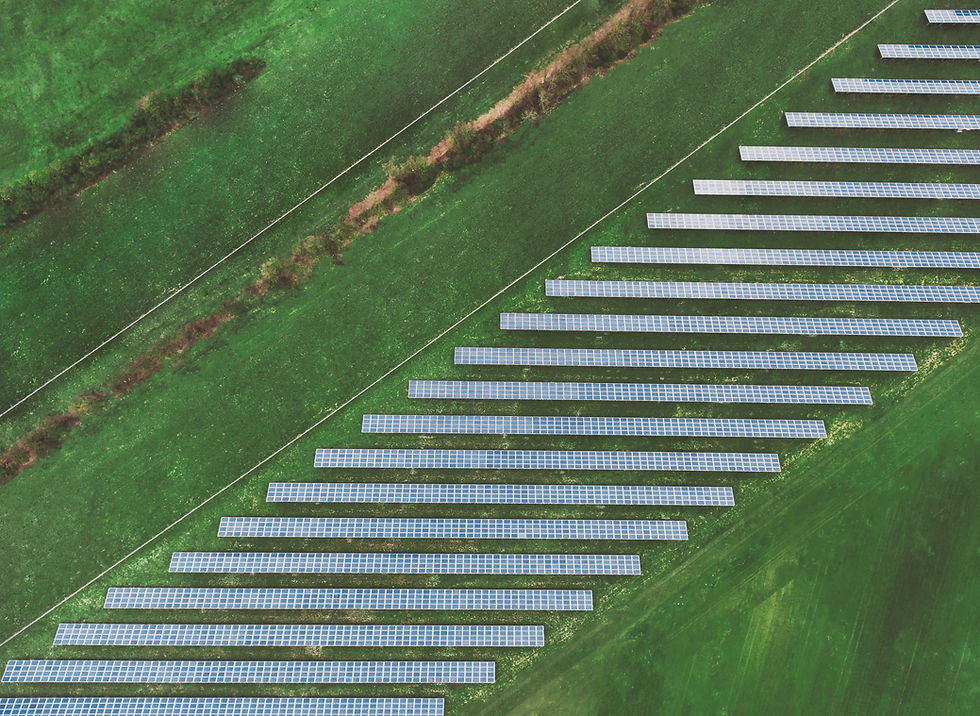
Western Downs Green Power Hub (a Neoen subsidiary) held land zoned as rural land west of Dalby, Queensland. It constructed a 460MW solar farm in accordance with development approvals, which included a material change of use of the land. After construction it received a notice from the Valuer General of the new land value for the site. The new valuation was on the basis the land was no longer rural and instead was for an “urban purpose”. This attracts a different calculation method which meant the new valuation was 300% more than the prior valuation. It went from $1,050,000 to $6,750,000.
At current rates, ordinary company land tax on $1,050,000 is about $13,350. On $6,750,000 it jumps to $114,375.
The Valuer General was relying on section 11 of the Land Valuation Act 2010 (Qld) (“LVA”) which says that zoned rural land becomes non-rural land if, under a development approval approving a material change of use, it is used for an ‘urban purpose’. Unhelpfully, urban purpose isn’t actually defined in the LVA.
Western Downs Green Power Hub tried to remedy this by submitting an application under the Land Valuation Act seeking the land be deemed to be rural land on the basis it met the criteria for this request under the Act. This would have invalidated the new method of calculation used and returned the valuation to its original amount. It also cures the issue without engaging in a debate about what “urban purpose” means in this context. However, the Valuer General denied the application.
Western Downs Green Power Hub requested that denial be internally reviewed. That was unsuccessful, at which point Western Downs Green Power Hub pursued an external review at QCAT. The QCAT judicial member considered the solar farm was not an “urban purpose”, because it was not in a city or town, stepped into the shoes of the valuer general to declare the land to be rural land, and set aside the new valuation. But it didn’t end here.
The Valuer General appealed that decision to the Supreme Court. It argued QCAT could not validly declare the land to be rural land because it had already ceased to be zoned rural pursuant to its use as an "urban purpose" under section 11 of the LVA. This was rejected as a valid ground for appeal because it incorrectly limited the operation of the Act, and attempted to position its own reliance on section 11 as the very reason its valuation could not be challenged. This was a circular argument.
The decision
The Court of Appeal held unanimously that the appeal be denied and noted a declaration that land is rural land might be validly sought because it is unclear whether a use is for an “urban purpose”.
Though the appeal had already failed, the Court of Appeal observed in relation to the meaning of “urban purpose” that:
whether the purpose is conducted in a city or town may not be relevant, and it is the purpose itself (not the land) that must be “urban”;
reliance on the definition for “urban purpose” in the Planning Act as referred to in the QCAT judgement is cautioned against, as that definition is expressly stated to relate to its section in the Planning Act; and
legislative amendment is recommended, so that “urban purpose” is defined within the LVA.
What does this mean for you?
If you own rural land used or proposed to be used for a wind, solar, or battery project, and you receive a notice from the Valuer General assessed on the basis your land is no longer rural, then applying for a rural land declaration may offer the same respite as it did for Western Downs Green Power Hub. To be granted a declaration the Valuer General must be satisfied that 95% of land in the State used for the same purpose is zoned rural land, and that the change in zoning makes a material difference to its value.
Thanks to this case, it is clear that the Valuer General's opinion that the land is non-rural due to use as an “urban purpose” does not preclude the granting of a rural land declaration if those criteria are met.
Practical steps
If you’re a developer, consider whether it’s necessary to add contingency into your budget to accommodate increases in rates and taxes if a section 11 application cannot be made.
If you’re a landowner that is considering granting a lease or option to lease for development of an energy project, talk to us about negotiating protections into your agreements so you are insulated from unexpected costs.

